Auxiliary heat supplements heat-pump operation when the system calls for additional heating. Emergency Heat is a backup operating mode on applicable systems. The exact behavior depends on the equipment and its controls.
Neither term means the same thing as requesting emergency repair.
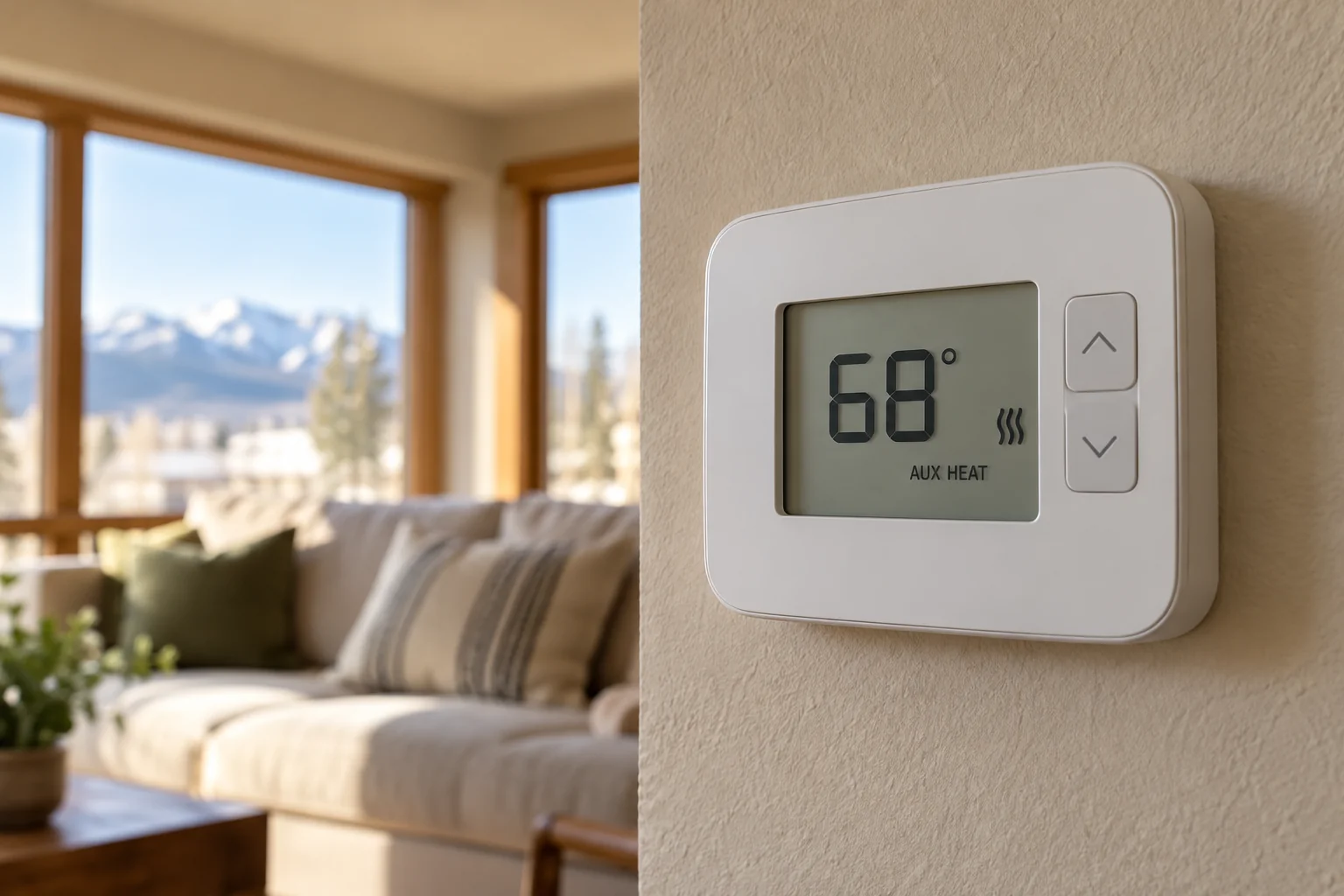
An AUX display is not a diagnosis
Auxiliary operation can be part of normal heating. The useful question is whether the system is keeping the home comfortable and operating as intended for its configuration.
If backup operation appears to have changed substantially or the heat pump no longer contributes heat, record the pattern and request service. Avoid changing installer settings or lockout temperatures yourself.
If the system works only on Emergency Heat
Tell the technician that normal heating is ineffective but backup heating works. Also report any outdoor-unit behavior, thermostat message, recent control changes, and increase in electricity use.
The system needs inspection before a failed component can be identified. Follow the manufacturer's instructions for temporary backup operation rather than treating it as a permanent repair.

Running longer is not always a fault
Operating time depends on the equipment and heating demand. A system that maintains temperature is different from one that runs continuously while the home becomes colder.
Keep notes on the indoor temperature and backup-heat display so the service conversation focuses on what is changing.
Can I disable auxiliary heat to reduce my bill?
Do not alter the system's configuration without qualified advice. The correct settings depend on the equipment and how it is designed to provide heat.
Get your heating operation assessed
For help in Littleton, call Heat Pump Repair Pro at (720) 571-0599. If the home has lost heat and you need urgent service, visit emergency repair.